|
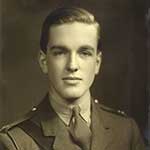
Lieutenant The Lord Clitheroe DL
Late The Life Guards
by Lieutenant Colonel The Honourable Ralph Assheton DL
formerly The Life Guards
|
Ralph John Assheton was born on Sunday 3rd November 1929, at home in Wilton Place, London, (a week after the Wall Street Crash and ‘rather late for lunch’). Home was a stone’s throw in one direction from the garden of Buckingham Palace, and with another stone, Hyde Park.
With his father working first as a stockbroker and then as an MP and his mother’s work in running the estate and farm, life was spent between London and the family estate of Downham in Lancashire.
As was customary at the time, he was initially ‘home schooled’ by nannies and governesses. This resulted in him learning some poor French, some moderate heraldry and a life-long supply of little songs and poems for every occasion.
In 1939, aged almost 10, he was sent to boarding school at Cothill in Oxfordshire, but as war broke out, he was moved to the Clitheroe Boys Grammar School. After a couple of terms and with the threat of invasion lessening, he was returned to boarding school.
He started at Eton in 1942, where (in an age when science was not taught there), he taught himself enough chemistry to be awarded an Oppidan Scholarship. He steered well clear of any sporting and musical endeavours and was therefore extremely surprised to be elected to Pop. He finished his time at Eton by winning a further scholarship to read Natural Sciences at Christ Church, Oxford.
Rather than going straight up to Oxford when he left school in 1948, he undertook his National Service, deciding to serve with The Life Guards. This was largely due to his first cousin David Yorke having just finished his enjoyable National Service with the Regiment and had handed down his uniform, which was useful in a time of clothing rationing. Ralph found basic training was pretty tough, and was perhaps not a gifted soldier, once getting lost on a night time map reading exercise; it later transpired that he had inadvertently scaled a number of high barbed wire-topped fences into (and out of) the highly sensitive RAF Farnborough site. He was lucky not to have been shot!
He served briefly at Combermere Barracks and (as was permitted at the time) took his hunter Skye to be stabled there for free. He much enjoyed riding her in Windsor Great Park. He was surprisingly (for a man with no mechanical training) made the Technical Adjutant of The Inns of Court and City Yeomanry. He enjoyed the fact that a staff car ferried him each day between Wilton Crescent and the Drill Hall, whilst his father (a senior Opposition MP) had to walk to work!
The break caused by his Army training meant that by the time he eventually went up to Oxford, he wasn’t quite so fascinated by chemistry, so he used his time there to make a lot of friends instead.
Unlike almost all of his friends who were going into the Foreign Office or their father’s businesses, he had a desire to go into Industry in order to ‘make things’, and to this end he joined the firm of F Francis and Sons in 1953. They had a factory near Burnley making lift equipment and another in south London making bottle tops. His commute to work clearly left a particularly striking impression as he took the bus from Belgravia to New Cross via Ditch Alley and Cold Bath Lane, noting that his fellow passengers often included ‘ladies of the night who were heading home looking rather jaded’.
Such exotic interactions were not enough to persuade him to stay in the world of bottle tops and in 1955 he started work at Borax Consolidated as an industrial chemist, soon moving on to a managerial role. Now that he had his work life organised, he fell in love with and married Juliet Hanbury, in a whirlwind romance. They went out to dinner twice before he proposed to her, and they were married just three months later! They were inseparable for 63 years.
He stayed with Borax for the rest of his working life, with it remaining in his portfolio even after Borax became part of the Rio Tinto Zinc empire in 1968.
He retired from RTZ on his 60th birthday and took on a few non-executive directorships. All this could be done from Downham, which was now firmly home. He was made a Deputy Lieutenant of Lancashire and was for 5 years Vice Lord Lieutenant.
He was able to laugh at himself, such as his tale of a childhood fancy dress party (aged about 5), when he dressed as a matador, and together with the other children, was presented to Queen Mary. All the little girls before him curtsied, so he did too! He blushed again a few years later when once more presented to the Queen who smilingly said she was happy to see that he had learned to bow!
Throughout his life, team sport, music and the arts played almost no part. He came to golf late in life, recognizing that this was a means to clinch business deals in the USA. But he did thoroughly enjoy his week or two of skiing each year at Klosters, always staying at the Wynegg Hotel with a collection of jolly friends. Otherwise, dining at the Pitt Club and an occasional visit to Wimbledon or the National Portrait Gallery punctuated his forays to London, but his principal enjoyment was shooting.
He was firm in his views, such as the inevitability of market forces to win in the end (however much governments try to interfere). He was loyal to his family, county, church and monarch. He expected things to be done properly but was appreciative and patient.
He professed not to be competitive, but he was enormously proud to have reached the age of 96, beating his grandfather’s record as the oldest Ralph Assheton by well over a year! He was dignified, reliable, affectionate, respected and much loved by his family (especially his eight grandchildren) and by Downham and he loved them in return.
He was hugely honoured and touched when The Life Guards chose to lay up one of their Regimental Standards in the church at Downham last autumn. It proved to be his last public ceremony.
In his latter years he often reflected that he had had ‘a very happy life’. |
|